We’re excited to share the latest insights from the 2025 Snohomish County PIHC annual Health & Well-being Monitor. The Health and Well-being Monitor was built and defined by our community who recognized that health is not just physical—it includes emotional, social, environmental, and economic factors. The Six Dimensions of Health framework continues to guide the analysis – from economic stress and mental health to community connection and neighborhood quality, these findings help us understand where we are—and where we can go together. Whether you’re a resident, partner, or policymaker, we invite you to explore the themes and take action to build a stronger, healthier Snohomish County.
Below are the major insights and trends identified:
Post-pandemic recovery is uneven,
with only modest recovery since 2023
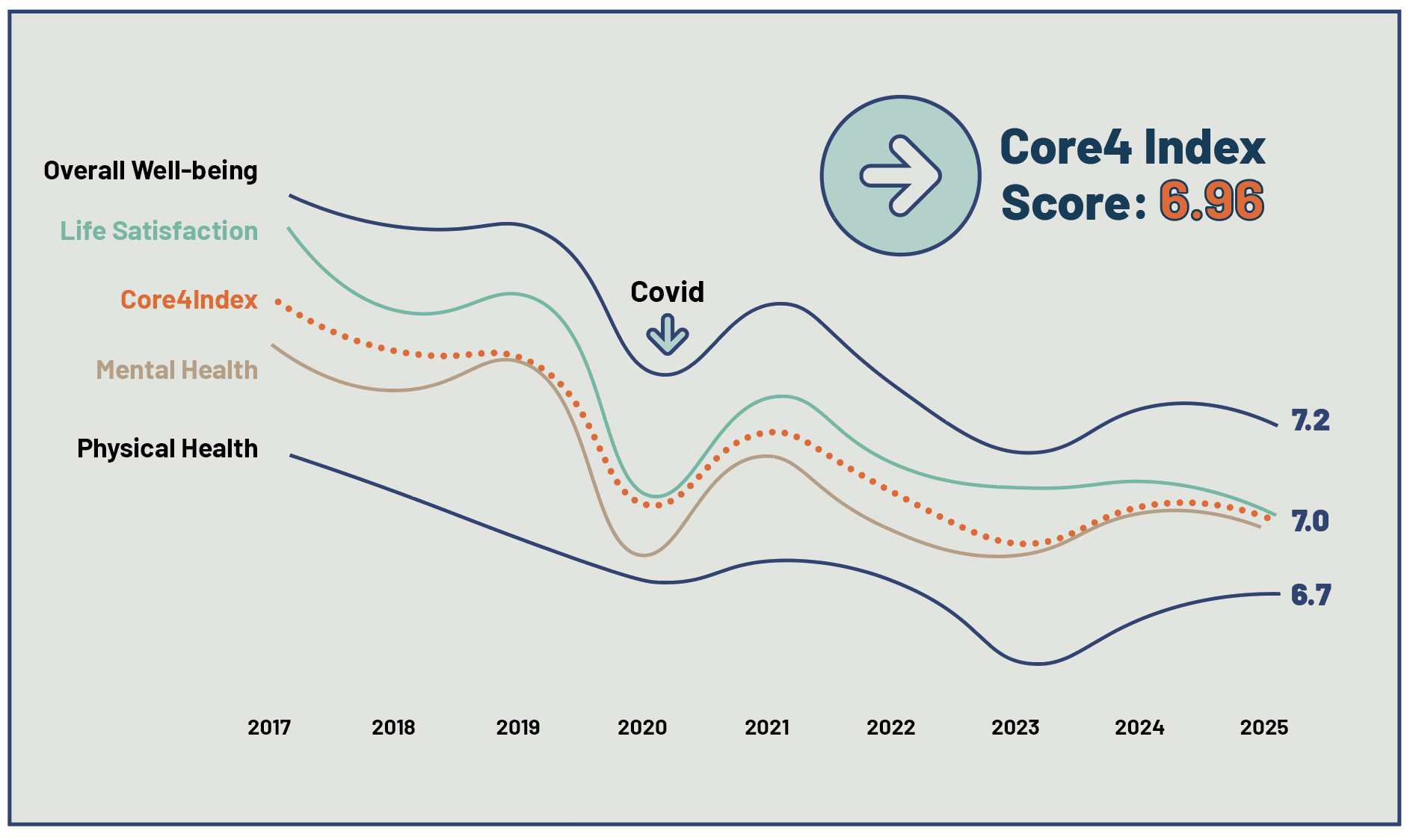
- The Core4™ Well-being Index remains below pre-pandemic levels and is similar to last year at 6.96 or a low ‘C’. (The Core4™ Well-being Index is an average of four highly indicative well-being satisfaction measures noted in the chart above.)
- Physical health satisfaction is still the lowest-rated Core4 measure, despite slight improvement.
- And, while one’s rating of their current state of physical health remains the top driver of overall well-being, mental and emotional health, financial security, and community efficacy have not fully rebounded. In addition, economic indicators have replaced long standing well-drivers, such as relationship satisfaction.
Economic stress is a dominant concern
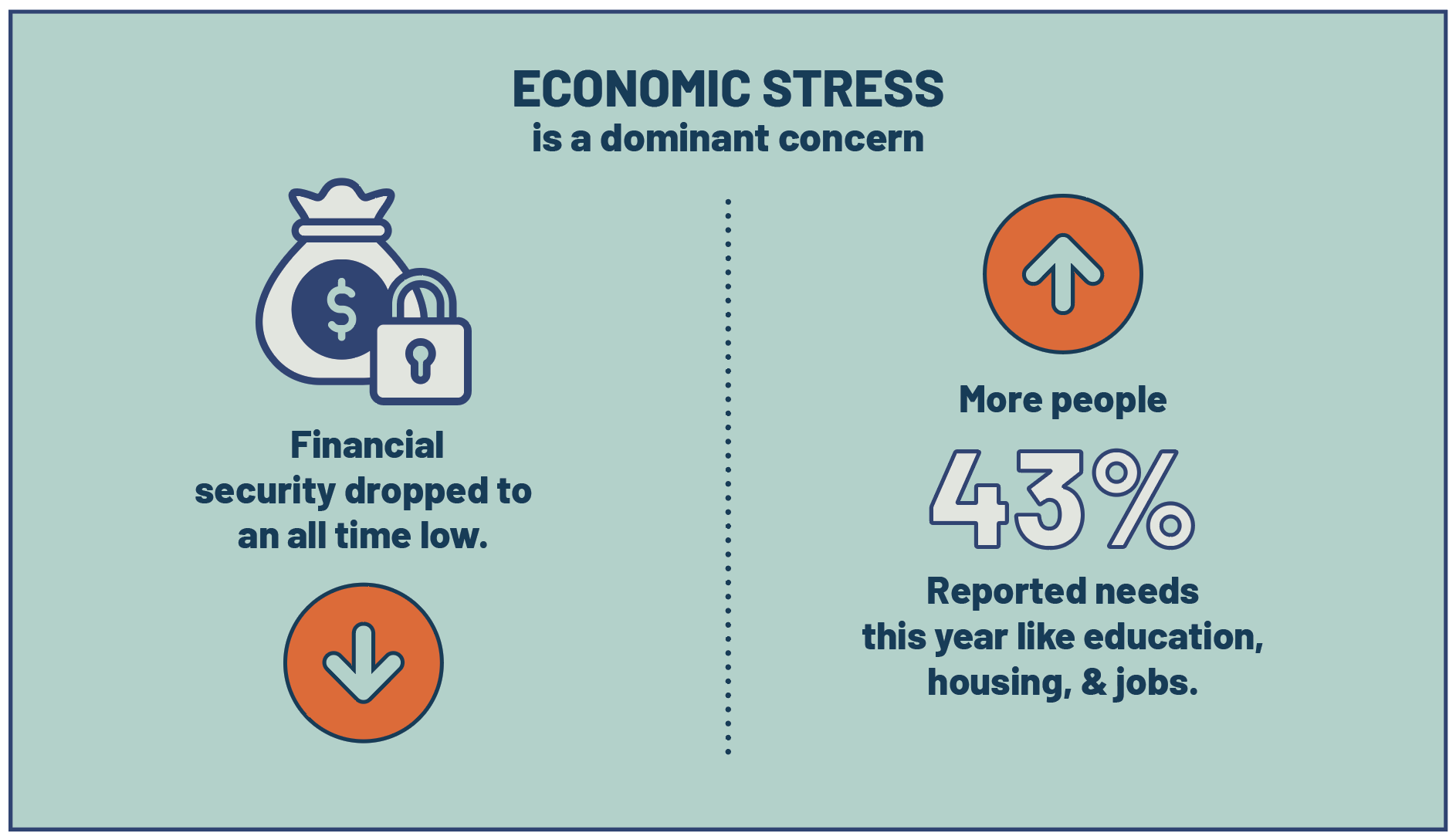
- The ability to meet basic needs has declined significantly and is now the #2 driver of well-being – a historic ‘first’, since measurement began in 2016.
- Job satisfaction also rose to a top indicator (#4) that can impact overall well-being. And, a related indicator, financial security, dropped to an all-time low.
- More people reported needs this year (43%) compared to last year. Top unmet needs include education, healthcare, jobs, utilities, and housing.
- One thing that would make life better? Top three response categories: ‘more money’ and ‘cost of living’ were the most common responses, next was better health or healthcare, followed by government changes.
Mental health and purpose are central to well-being
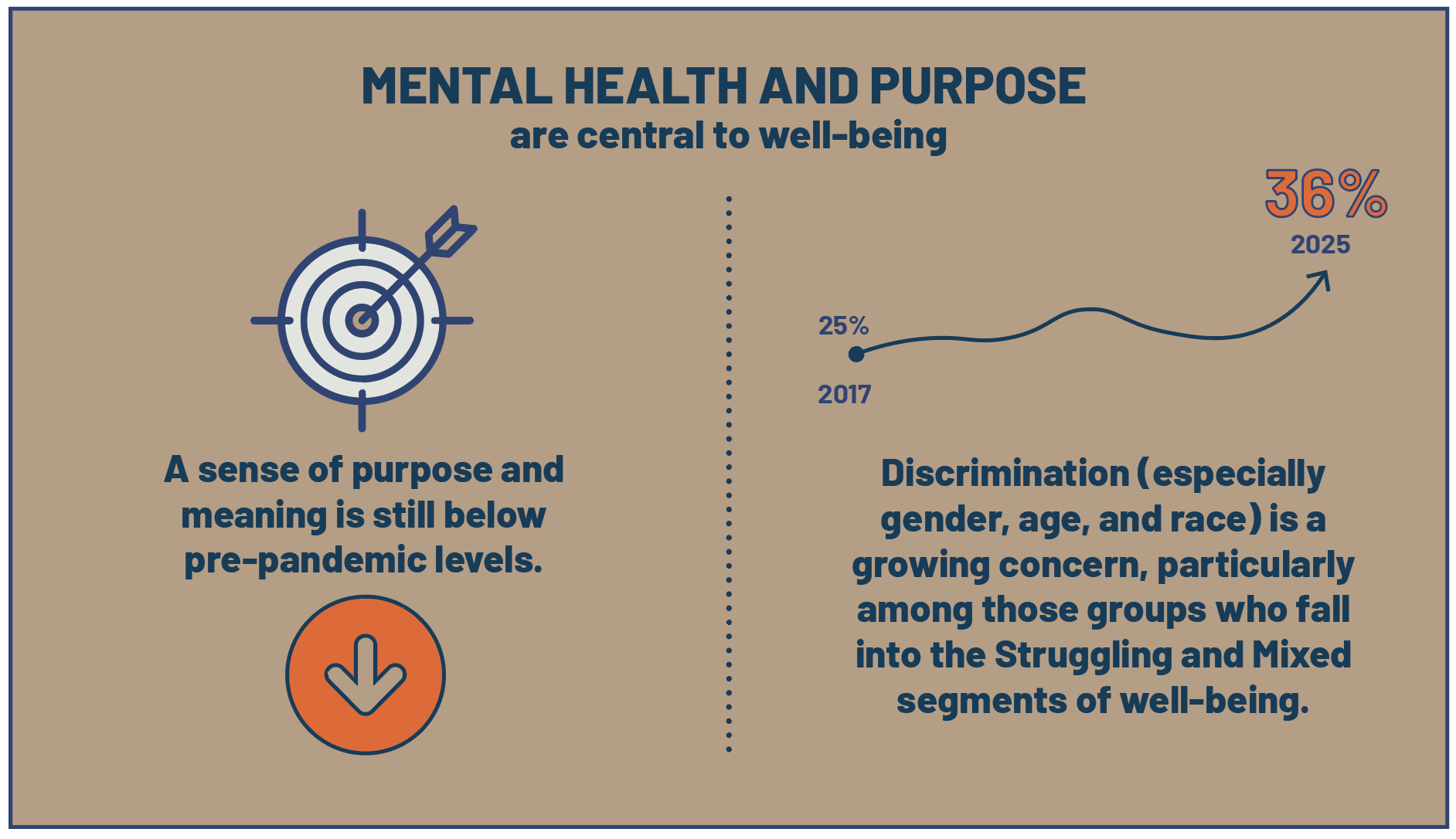
- Mental/emotional health is the #3 driver of overall well-being.
- A sense of purpose and meaning is still below pre-pandemic levels.
- A relationship indicator, discrimination (especially gender, age, and race), is a growing concern, particularly among those groups who fall into the Struggling and Mixed segments of well-being.
Community connection is fraying
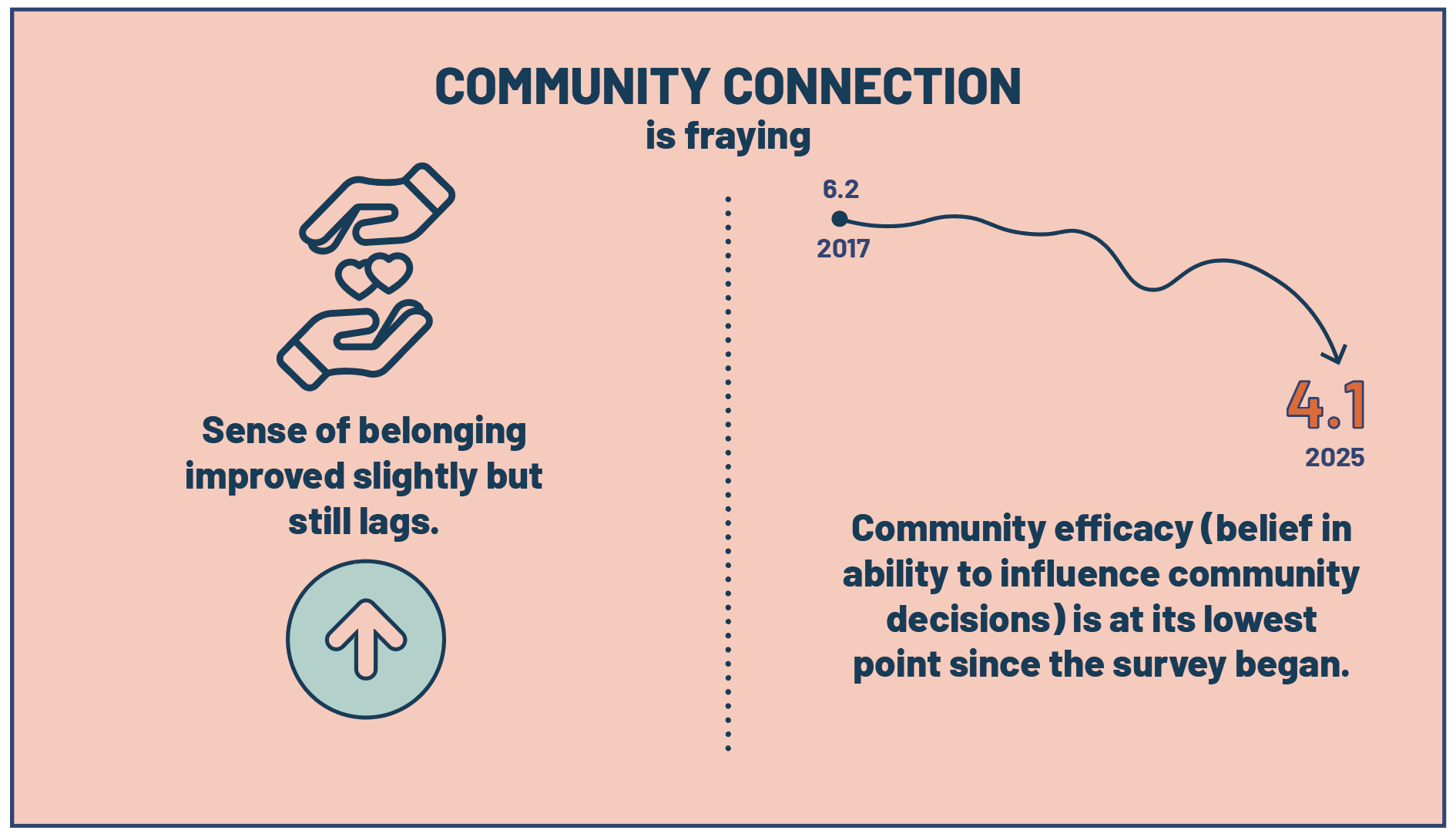
- Community efficacy (belief in ability to influence community decisions) is at its lowest point.
- Sense of belonging improved slightly but still lags.
Well-being Segment Summaries
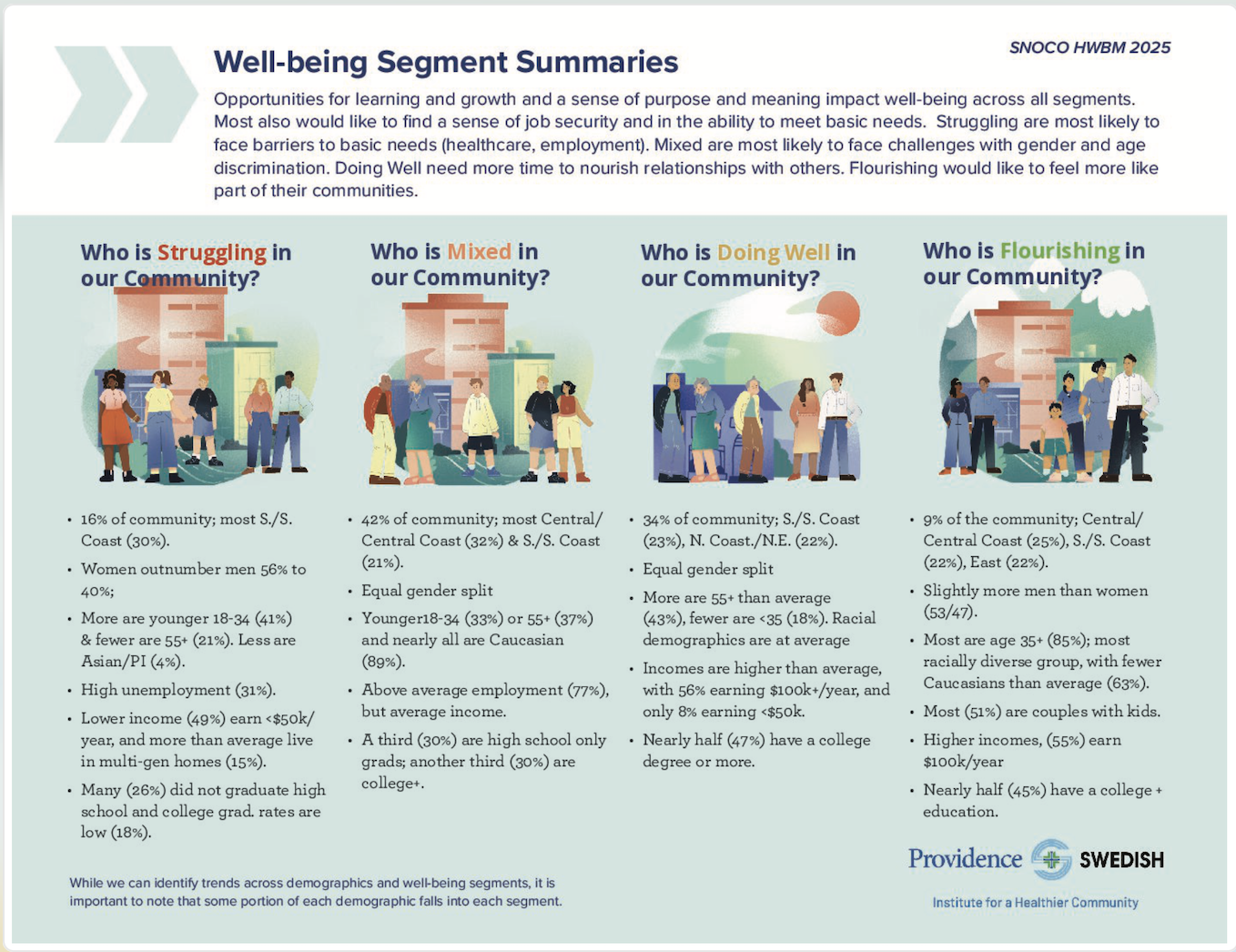
Download the Segment Summary handout here.
Disparities Across Well-being Segments
-
- Declines were seen across all well-being segments, especially among those who are Mixed and Flourishing.
- Those Struggling (16% of our community): Younger, lower-income, more likely to face unmet basic needs and discrimination.
- Those Mixed (42% of our community): Largest group; economically average but emotionally and socially strained.
- Doing Well (34% of our community): Financially stable but still seeking purpose and connection.
- Flourishing (9% of our community): High well-being but still report needs like cost of living/housing, education, and community belonging.
Among the big opportunities, there is positive movement
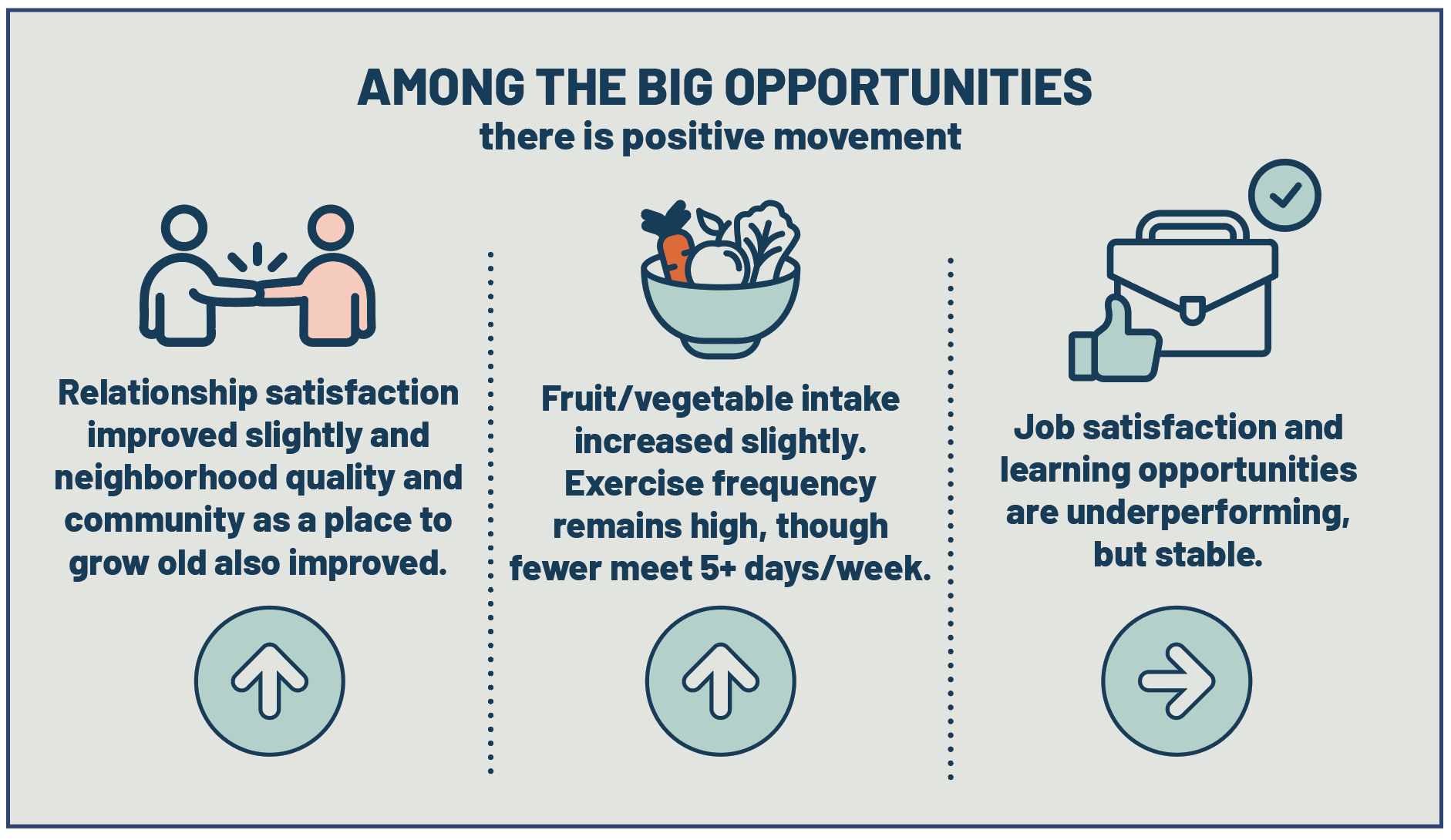
- Relationship satisfaction with others improved slightly and neighborhood quality and community as a place to grow old also improved.
- Fruit/vegetable intake increased slightly. Exercise frequency remains high, though fewer meet 5+ days/week.
- Job satisfaction and learning opportunities, although underperforming, are stable.
For more information about the 2025 Snohomish County PIHC Health and Well-being Monitor results you can learn more or download materials to share here.
We’d be happy to provide more information or walk you through a presentation to help guide efforts and programming in the communities you serve. Contact us at [email protected].
A commitment to our communities
For generations, Providence Swedish has served as a vital safety net for those who are underserved. In combination with the work of PIHC, our community benefit programs further a longstanding commitment to improving community health. Guided by Community Health Needs Assessments, we work in community to make lasting, meaningful impact. Learn more about CHI efforts in North Puget Sound in our latest Annual Report to Our Communities, Community Health Needs Assessment and Community Health Improvement Plan.